
9 years ago, gun violence took my father. Today, Ohio political silence is costing more lives
Oct 19, 2026 | 3:30 am ET

Description
The Ohio Statehouse. (Photo by David DeWitt/Ohio Capital Journal)
Oct. 12 marked nine years since my father was murdered.
Nine years. Nearly a decade of birthdays, holidays, milestones, and ordinary moments marked by the absence of someone who should still be here.
People often talk about grief as something that fades with time. What I’ve learned is that grief never ends. It evolves, but it never leaves.
It shows up in empty chairs at family dinners. It lingers in the silence during holidays. It appears during life’s happiest moments, reminding you of the person who should have been there to celebrate with you.
Since my father’s life was taken, our country has endured an unprecedented era of gun violence. Families across Ohio and throughout the nation have joined a club that no one ever wants to become a member of.
Children have buried parents. Parents have buried children. Communities have been rattled by bullets and forever changed by violence. Local economies have felt the tremendous cost that gun violence imposes.
Hospitals, victim service providers, mental health professionals, schools, law enforcement agencies, and community organizations have stretched resources to meet growing needs.
Behind every statistic is a family.
Behind every number is a name.
And behind every act of violence is grief that never truly ends.
Some families are experiencing that grief for the first time today.
At this very moment, someone in Ohio may be receiving a phone call that will divide their life into a “before” and an “after.” They are planning a funeral they never imagined having to arrange.
They are answering impossible questions from children. They are helping parents navigate a loss no parent should ever experience. They are trying to understand what life looks like without someone they love.
Many of these tragedies are preventable.
While America has recently seen encouraging declines in homicides, early data suggests some of the largest decreases on record. Yet another crisis continues to grow in the shadows. Suicide rates remain at all time highs and continue to claim lives, often erasing much of the progress made elsewhere.
Since the beginning of 2017, the year my father was murdered, an estimated 409,640 Americans have died from firearm-related causes and another 321,721 have been injured.
The United States has experienced 4,973 mass shootings and more than 17,000 unintentional shootings. Most troubling of all, at least 47,725 children and teens have been shot or killed. Behind every one of those numbers is a family, a community, and a future forever changed.
Those aren’t just statistics. One of those numbers is my dad. They are our neighbors, classmates, teammates, friends, sons, daughters, mothers, and fathers. They are empty chairs at dinner tables, missed birthdays, unfinished dreams, and families forced to navigate a lifetime of grief.
That reality forces us to ask an important question:
What can we do when someone is experiencing the darkest moment of their life?
How do we intervene before a tragedy occurs?
How do we protect a person from themselves while also protecting those around them?
One answer is the adoption of common-sense policies such as Extreme Risk Protection Orders.
This is not about taking away constitutional rights. It is about creating a legal, temporary intervention during a crisis. It is about giving families and communities another tool to save a life.
The same is true for secure firearm storage laws. We have witnessed far too many tragedies involving children who gained access to loaded, unsecured firearms. In a matter of seconds, lives are forever altered.
Responsible gun ownership includes responsible gun storage.
That should not be controversial.
In fact, it should be a conversation we have more often.
And yet, as we enter another election season, I cannot help but notice the silence.
Candidates are asking for votes. Campaign signs are appearing in our neighborhoods. Speeches are being given. Promises are being made.
But where are the conversations about firearm deaths?
Where are the discussions about protecting children from their leading cause of death?
Where are the proposed solutions for reducing suicides, preventing accidental shootings, supporting families impacted, and saving lives?
Too many candidates seem afraid to engage in these conversations because they are difficult. Some fear being labeled “anti-gun.” Others avoid the topic altogether because it is politically uncomfortable.
But difficult conversations should not make us silent.
They should challenge us to think creatively.
They should encourage us to ask hard questions.
They should inspire current and future leaders to seek solutions.
Most importantly, they should help us save lives.
Gun violence has been the leading cause of death for children and teens in America for years. It surpasses car crashes and many diseases that once dominated those discussions. This is a uniquely American crisis, and it demands uniquely American leadership.
The conversation should not be about choosing between the Second Amendment and public safety.
We can support both.
The Second Amendment is a constitutional right. But with every right comes responsibility.
Responsible gun ownership means storing firearms securely and away from children. It means recognizing that guns are not toys. It means understanding the consequences when firearms fall into the wrong hands.
It means having honest conversations about risk, accountability, and prevention. And it means coming to terms with that guns are dangerous and should be viewed that way by both gun owners and non-gun owners alike.
These discussions are not attacks on responsible gun owners.
They are opportunities to define what responsible ownership looks like.
For nine years, I have carried the pain of losing my father. Other families have carried that burden for decades. Some are carrying it for the very first time today.
That is why I am asking every candidate running for local office, state office, governor, or any position of public trust a simple question:
What will you do to save lives?
What policies will you support to protect children?
How will you encourage responsible gun ownership?
How will you address suicide prevention?
How will you handle the mental health crisis in our state and country?
How will you support survivors and victims’ families?
What difficult conversations are you willing to have?
The answers matter.
Because leadership is not measured by the conversations we avoid. Leadership is measured by the challenges we are willing to confront.
Ohio stands at a crossroads. We can choose action. We can choose prevention. We can choose policies that save lives and support families.
Or we can choose silence. And silence is not a political strategy.
Silence is not leadership, it’s complacency.
Silence is surrendering our responsibility to protect our children and accepting preventable tragedies as inevitable.
Silence is accepting that another family will receive the phone call that changes everything and failing those who can no longer speak for themselves.
Silence is avoiding the difficult conversations because they are politically uncomfortable and refusing to confront a problem that continues to devastate families across Ohio and our nation.
Silence is the absence of courage when courage is needed most.
And silence will not save a single life.
Nine years after losing my father, I know silence has never healed a wound, prevented a tragedy, or saved a life and one thing that I know for certain: every life saved means another family won’t have to experience the grief that mine lives with every day.
That alone makes these conversations worth having.
When the next family receives the phone call that changes everything, will we be able to say we did everything we could to prevent it?
Because the question before us is no longer whether we can afford to have these conversations. The question is whether we can afford another life lost because we refused to.
After nine years without my father, and after more than 738,184 Americans shot, killed, or injured by firearms since his murder, I already know the answer.
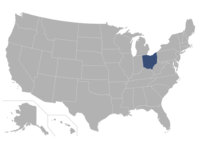
Columbus, OH