Court halts enforcement of law defining sex in Montana code
Nov 19, 2026 | 7:11 pm ET

Description
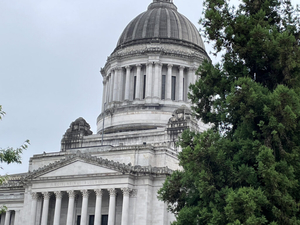
The dome of the Montana State Capitol pictured on March 28, 2026. (Jordan Hansen / Daily Montanan)
A Missoula district court has blocked the state from enforcing a 2025 law that defines sex as a biological binary in state law and ties legal references to gender to similar definitions.
On Tuesday, District Court Judge Leslie Halligan granted a preliminary injunction against Senate Bill 437, which Gov. Greg Gianforte signed into law this spring, nearly a year after the Legislature adjourned.
The plaintiffs in the case, a group of transgender, intersex and Two-Spirit Montanans, also argue the law changes the way they would interact with the state in instances such as navigating the Motor Vehicle Department, securing marriage licenses or seeking protections under the Montana Human Rights Act.
“SB 437 likely requires Plaintiffs to navigate Montana law and State administered systems under classifications that do not recognize their gender identity or, for certain Plaintiffs, their individual medical circumstances,” Halligan wrote in her order. “Those harms affect Plaintiffs’ privacy, equal treatment, and legal recognition.”
A district court judge struck down a similar bill in 2025.
Sponsored by Sen. Carl Glimm, R-Kila, and passed by the 2023 Legislature, that bill was found unconstitutional in June 2024 for violating the state’s single-subject rule for legislation.
In a separate order on the same bill in February 2025, Halligan found legally defining sex as a binary “explicitly excludes (two plaintiffs) from the definition of human beings.”
At the time, the state said Halligan’s order was moot given the earlier decision the title made the bill unconstitutional, but Halligan said it was relevant given legislation emerging in 2025.
Senate Bill 437, sponsored by Glimm in 2025, has a clarified title, but Glimm said the definitions are the same and “the mechanics of this bill will remain the same.”
Glimm told the Daily Montanan he was disappointed with the preliminary ruling.
“It’s the legislature’s job to make definitions, and unfortunately the judiciary here has stepped in and tried to take that under their own control,” Glimm said. “It’s a common sense issue that almost every Montanan understands. If you ran into them on the street, they’d be completely baffled that a bill like this ends up in court.”
Glimm said he is not currently planning for additional legislation on defining sex for the upcoming session, but wants to see the current litigation play out.
In the lawsuit, the plaintiffs, represented by Upper Seven Law, argue that the legal mismatch between the state-imposed definition and how the plaintiffs classify themselves in daily life could require a disclosure of private information, violating the Montana Constitution.
The state had argued that in several specific instances, such as “athletic teams and sex-segregated sports,” correctional classifications, family and parental law, and health record keeping, the law protected state interests.
But in the order this week, Halligan wrote that in many of those arguments, the defendants had not shown why such a definition should be so broadly-applied in state statute when a more narrowly tailored law could suffice.
The preliminary injunction preserves the status quo while the court focuses on the questions of constitutional violations, Halligan wrote.
“It also leaves the Legislature free to enact laws that address specific, demonstrated governmental interests through means consistent with constitutional protections,” she wrote.
In a statement, Molly Danahy, Upper Seven Law’s litigation director, panned the Legislature’s decision to pass the bill after the court had struck down the previous, similar law.
“The Legislature made a second attempt to pass essentially the same law — and then took unprecedented steps to avoid judicial review,” Danahy said. “But even these extraordinary procedural shenanigans — including holding the bill for nearly a year before signing it into law — couldn’t save it from ordinary constitutional review.”
Speaker of the House Brandon Ler, R-Savage, had waited 10 months before sending the bill to the governor, saying lawmakers wanted prior legal challenges to play out and allow the new bill to stand on its own.
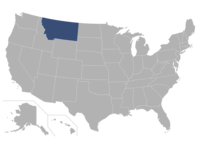
Helena, MT