Landry’s new rules for nonprofits to get state funds rankle some legislators
Nov 20, 2026 | 10:00 am ET
Description
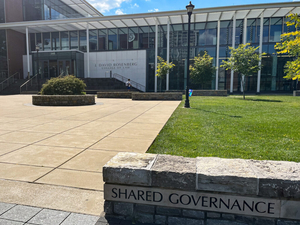
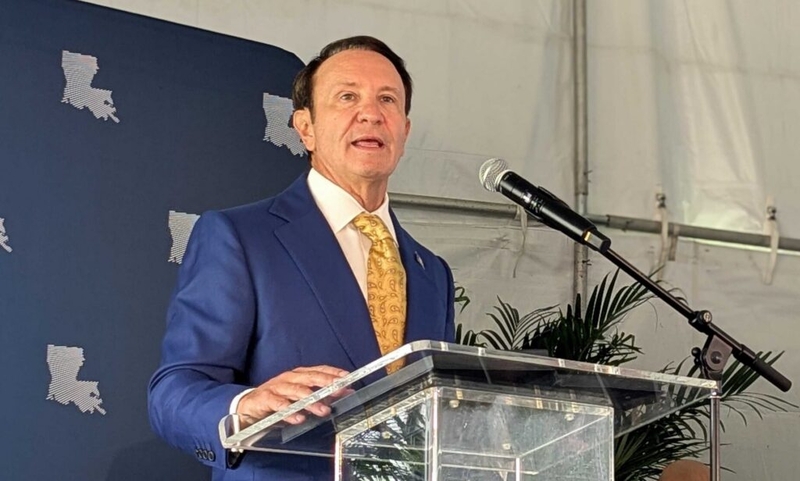
State money that lawmakers approved for various nonprofit organizations and local government use was delayed for weeks earlier this fall under new rules Gov. Jeff Landry put in place to vet each recipient. Some lawmakers have said the governor is overstepping his powers. (Photo by Julie O'Donoghue/Louisiana Illuminator)
New rules Gov. Jeff Landry put in place held up tens of millions of dollars for local governments and civic organizations for three weeks this fall, and state Treasurer John Fleming said his office is still working to make sure everyone owed funding gets paid.
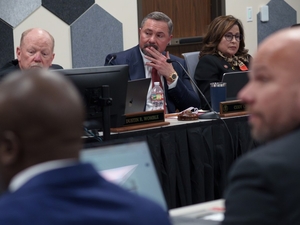
“We have a backlog. It’s just going to take a little time to get through that,” Fleming told lawmakers Thursday at a meeting of the Joint Legislative Committee on the Budget at the Capitol.
The holdup has left legislators from across the political spectrum disgruntled. Several lawmakers said they have received calls from nonprofit and local government leaders who depend on the money.
“Of course, if there’s fraud, waste and abuse, we want y’all to stop it. But why stop the entire process?” Rep. Denise Marcelle, D-Baton Rouge, said.
Fleming froze disbursements to hundreds of entities — such as local parks departments, senior citizen organizations and food banks — from Oct. 21 until Nov. 13. The pause was in response to new public contract requirements the Landry administration issued to more thoroughly vet nonprofits that receive state money.
As a compromise with lawmakers, Landry’s staff and Fleming agreed not to impose the new rules on nonprofit contracts executed before Dec. 15.
But Senate President Cameron Henry, R-Metairie, suggested the Landry administration might be overstepping its authority with the stricter requirements for these nongovernmental organizations, or NGOs. By law, the legislature is supposed to have more power than the governor over state spending decisions.
“I thought we got to appropriate the money, and then other people get to execute it,” Henry said. “We’re kind of blending those two right now, and it’s not making a whole bunch of people real happy. Because if we do it here, we can do it for other things unrelated to NGOs, and we don’t want that either.”
Henry also said it was disruptive to adopt stricter rules for nonprofits in the middle of the annual state budget cycle, which started July 1. Had the new rules gone into effect before lawmakers approved the budget in May, they could have avoided giving money to any nonprofit that couldn’t meet the new standards, he said.
Nonprofits are a popular target for legislators’ pet projects. Unlike most other elements in the state budget, they are inserted with no public discussion or transparency about which legislator has asked for them.
Landry’s office declined to answer a question about why the governor didn’t veto nonprofit funding from the budget that concerned him. If he had removed more of it himself, there would be less need to use the new rules he imposed a few weeks ago.
It was a tactic former Gov. Bobby Jindal used to crack down on nonprofit spending in the state budget, vetoing hundreds of legislators’ earmarks during his first two years in office.
Angele Davis, Landry’s inspector general and chief integrity officer, is leading his effort to scrutinize nonprofit allocations. She was also Jindal’s budget chief.
The new rules require nonprofits receiving state funding to provide more detailed lists of vendors or subcontractors they use and to cap their administrative expenses at 10% of the state allocation they receive. They must also take standard anti-fraud measures when using the public dollars and submit their bank statements to the state, among other changes.
Some, but not all, of the new rules are required under a 2025 state law that hasn’t been enforced, Davis said. Landry also placed more scrutiny on nonprofits with an executive order in late July he called the Louisiana Taxpayer Protection Initiative.
In October, the governor’s office announced the inspector general and treasurer had uncovered four instances since 2023 in which state appropriations to nonprofits had been misspent.
They include a $400,000 payment to the National Association for African American Economic Development and $37,500 for Divine Kingdom Ministries in the 2024-25 fiscal year.
The two other suspect allocations, totalling $50,000 and $250,000, were made to organizations that haven’t been publicly identified. In an interview Thursday, Davis said more information about the transactions couldn’t be shared because investigations are still ongoing.
The four infractions, totaling less than $750,000, make up a very small amount of hundreds of millions of state dollars spent with nonprofits in the past three years. In the 2026-27 fiscal year alone, the state has allocated $113 million to 272 different nonprofit organizations, according to Davis.
The inspector general said her office has not finished its review of nonprofit state spending.
“We know that it’s very difficult once you pay the funds out to go back and chase and try to recoup those funds. Restitution is pennies on the dollar,” she told lawmakers.
Legislators are particularly concerned about one new rule they said might prevent smaller nonprofits from getting their state funding. The Landry administration has reduced the funding a nonprofit can obtain upfront from 50% to 25%. Davis wants most of their state funding paid through reimbursements.
Sen. Gerald Boudreaux, D-Lafayette, said some organizations don’t have enough reserves on hand to spend money ahead of time and wait on a state reimbursement. They need the money in advance of spending it to run state-funded programs, he said.
Commissioner of Administration Taylor Barras, who oversees budgeting for the governor, told lawmakers Thursday that exceptions could be made for nonprofits that need more flexibility.
Baton Rouge, LA