Mamdani Enlists Unions in Push to Overhaul NYC Hiring
Oct 05, 2026 | 4:00 am ET

Description
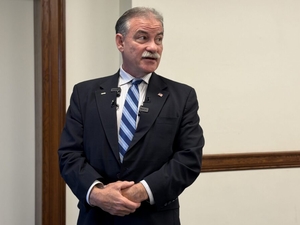
Photo courtesy of New York Focus
Mayor Zohran Mamdani plans to take a swing at one of New York City’s most intractable problems: its dysfunctional, century-plus-old system for hiring workers.
Mamdani on Monday will announce a task force charged with proposing reforms to the city’s civil service system, according to an announcement shared exclusively with New York Focus. The 12-person group of city officials and labor leaders will study the system and then recommend legislative changes in Albany, since the state governs the city’s system.
While past attempts to revamp the system have sputtered in the face of opposition from labor unions, a number of top unions have signed onto Mamdani’s effort. Their involvement could limit the scope of reforms the panel will consider, but also makes the push more politically viable.
Created in 1883 with the goal of awarding government jobs based on merit instead of patronage, the system has come under increasing criticism for convoluted rules that deter top talent and contribute to the city’s vacancy crisis. For the 80 percent of city jobs that require an exam, applicants must sift through job titles with confusing names that bear little resemblance to their real responsibilities, often wait years for a relevant agency to schedule an exam, then wait months more for the city to release lists of people who scored well enough to qualify for jobs. The process often takes 15 months from exam to hire.
“Talent is going to go where they have the offer, and if we can’t offer people jobs quickly, then people move on with their life,” said Yume Kitasei, commissioner of the Department of Citywide Administrative Services, in an interview.
Kitasei, whose agency runs the civil service system, will chair the so-called Civil Service Modernization Advisory Committee. The vice chair will be Henry Garrido, executive director of DC37, the biggest union of city workers. The panel will make its initial recommendations in December 2026 with the hope of getting them passed in next year’s state legislative session, then release another set of proposals in December 2027.
Kitasei did not detail particular reforms that might be considered. But the group’s primary goals include helping the city hire qualified talent more quickly, creating clear pathways into city service and for career advancement, and modernizing tech systems that can be decades out of date, officials said.
Municipal unions have defended the current system as a tool for protecting merit-based hiring. New York Focus reported that DC37 and other unions quietly killed a 2024 plan by former Mayor Eric Adams to opt into a state program that waived exams for hundreds of jobs; Mamdani has declined to revisit that program.
The most significant recent effort came in 2011, when Michael Bloomberg pushed to significantly shrink the number of titles that require exams. That proposal died due to opposition from unions.
But Garrido told New York Focus he is open to changes, especially ones that would shorten the time applicants wait to receive offers and modernize job descriptions. He pointed to recent city job postings that require experience with “video display terminals,” an outdated term for computer monitors that has not been widely used for decades.
Have a tip about government hiring? We want to hear from you. Reach out at [email protected].
“You can have a system that promotes and protects merit and fitness, but at the same time [is] competitive, if you remove some of the bureaucratic things,” Garrido said.
Mamdani has reason to care about the civil service system. Nearly 75,000 people applied for roles in his administration after his election, and his ambitious agenda could hinge on a well-staffed workforce. Short-staffing is already impeding his work: agencies including the Health Department, Police Department and Finance Department all described challenges due to staff vacancies in the latest annual Mayor’s Management Report released last month.
Outside experts who have long urged reform were cautiously optimistic about Mamdani’s effort. Robert Gordon, executive vice president at the Recoding America Fund, a nonprofit focused on government capability, said he hopes the group tackles the outdated exam questions that often fail to capture relevant skills, the slow test-scoring system, and rules that allow only internal candidates to qualify for promotions.
“It’s truly wonderful the mayor and DCAS commissioner and head of DC37 are committed to these challenges and building a better system,” Gordon said. “It’s a great credit to the mayor that he says this matters.”
Andrew Rein, president of the Citizens Budget Commission, a think tank, said the panel should try to broaden job titles and reconsider the so-called “one in three” rule, which requires city agencies to first consider hiring one of the three highest-ranked candidates before moving slowly down a ranked list of test-takers.
The rest of the task force includes six top city officials and four union leaders. On the city’s side are Office of Management and Budget Director Sherif Soliman, Corporation Counsel Steve Banks, Deputy Mayor for Operations Julia Kerson, Chief Counsel Ramzi Kassem, Department of Social Services Commissioner Erin Dalton and Office of Labor Relations Commissioner Renee Campion. The labor leaders are Gloria Middleton, president of CWA Local 1180; Joseph Colangelo, president of SEIU Local 246; Anthony Wells, head of SSEU Local 371; and Benny Boscio, president of the Correction Officers’ Benevolent Association.
The Mamdani administration will do a listening tour with rank-and-file city workers and speak to job-seekers to include their perspectives, Kitasei said. Besides the legislative changes, the panel will also consider administrative changes the city could implement itself, including different testing approaches and better communication with applicants.
Fixing civil service won’t solve all of the city’s staffing issues. Kitasei noted that hiring has also been hampered by fiscal constraints, including a two-for-one policy imposed by Adams in 2024 that only allowed agencies to hire a new worker after two departed. (Mamdani lifted the policy in February.)
Kitasei said she is optimistic that the administration will find common ground with unions, whom she described as equally invested in a real overhaul. But she acknowledged that change won’t be easy.
“Everything’s on the table, but obviously there are political realities around this effort,” Kitasei said. “So it’ll also depend on what other people’s red lines are.”

Albany