Trump administration blocks maintenance funding for Nevada national parks
Oct 14, 2026 | 8:00 am ET
Description
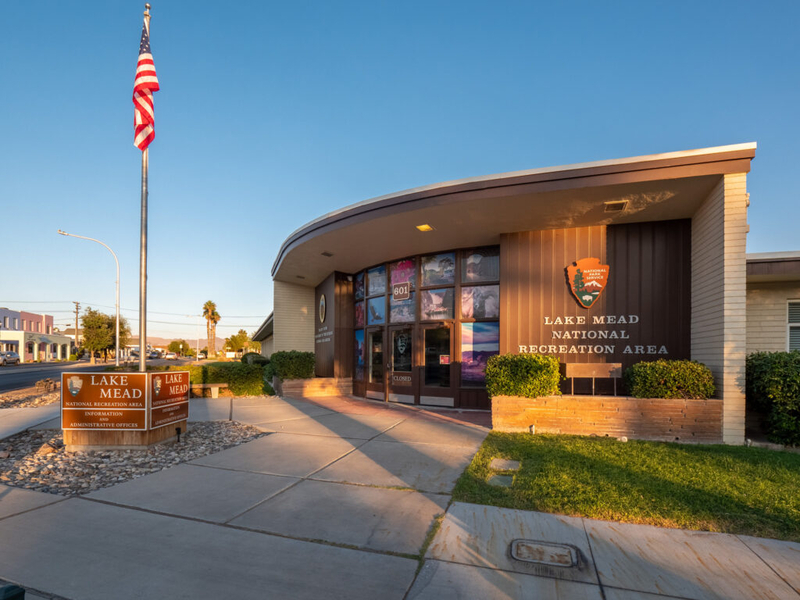
The Desert Research Institute faced the largest single-project financial loss in the state and across the country, losing around $3.4 million for mapping of unapproved roads in the Lake Mead National Recreation Area and the survey of nearby buried cultural resources exposed by falling lake levels. (Photo: NPS/Lake Mead National Recreation Area/Andrew Cattoir)
The Trump administration has blocked millions of dollars in federal funding for numerous projects in Nevada’s national parks which would have supported everything from long-term weather stations and road mapping to wildlife monitoring and cultural resource preservation.
In August, the U.S. Department of the Interior canceled eight contracts for projects in Nevada and downgraded four additional projects across the state to “low priority status,” putting at least $4.4 million in previously secured funding on hold, according to the nonpartisan conservation group Center for Western Priorities.
The blocked agreements would have paid outside organizations for specialized environmental and cultural resource work in Tule Springs Fossil Beds National Monument, the Lake Mead National Recreation Area, and the Mojave Desert.
The conservation group pulled records from an internal National Park Service database and published them in an interactive map that contains details for each of the canceled or downgraded projects.
Nationally, the Trump administration blocked more than 130 agreements and downgraded roughly 1,500 projects across the country, pulling nearly $26 million in funding. The blocked projects had already obtained funding, largely through congressional appropriations and existing federal programs.
Neither the Department of the Interior nor the National Park Service immediately responded to Nevada Current’s requests for comment.
The Great Basin Institute, a Reno-based conservation nonprofit, accounted for more than 70 of the blocked agreements nationally, amounting to $12.7 million in funding. In Nevada, the nonprofit accounted for all but two of the canceled contracts.
The Desert Research Institute faced the largest single-project financial loss in the state and across the country, losing around $3.4 million in federal funds. Those funds would have supported the mapping of unapproved roads in the Lake Mead National Recreation Area and the survey of nearby buried cultural resources exposed by falling lake levels.
The survey would have helped determine the damage to buried cultural resources by unapproved roads and identified potential areas where new approved roads could be developed without further damaging significant cultural resources.
Funding for the operation and maintenance of long-term weather stations that provide essential, real-time climate data for Mojave Desert parks was also blocked. The Desert Research Institute said that without the funding “real-time updates would be less accurate, putting staff, visitors, and surrounding communities at greater risk during extreme weather events.”
The next largest loss of funding for Nevada’s state parks was a roughly $345,000 project headed by the Great Basin Institute that would have collected long-term ecological data on wildlife, vegetation, and hydrology in the Mojave Desert.
Funding would have paid for a bat specialist to conduct surveys and manage data, and two ecological technicians to monitor vegetation and desert springs. Project managers noted that without the funding vital conservation efforts would halt and jeopardize the health of desert ecosystems.
Several projects at the Lake Mead National Recreation Area were downgraded to “low priority” status, including a flash flood warning system, safety lights, and restroom maintenance.
Flash floods during monsoon season remain a critical issue at the Lake Mead National Recreation Area. Funding for the project would have provided for annual maintenance on the alarm system at Cottonwood Cove and Willow Beach that detects incoming floods and plays a recorded warning telling people to leave.
Great Basin National Park also saw funding blocked for a project to restore native trout habitat, ranger fishing programs, backcountry patrol, and thinning to reduce wildfire risks.
Las Vegas, NV