Washington among 4 states with highest rate of whale entanglements, report shows
Oct 12, 2026 | 7:00 am ET
Description
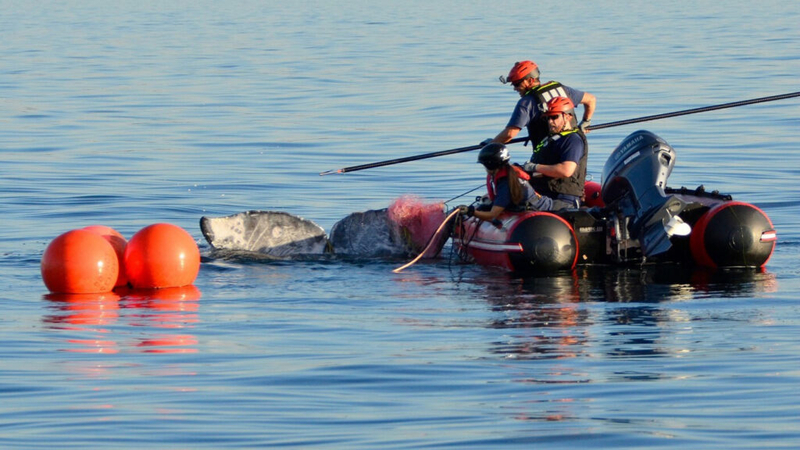
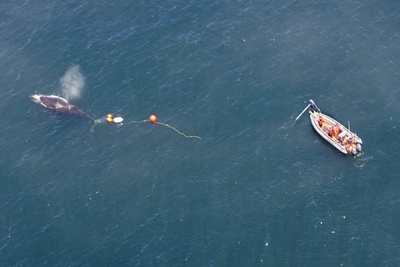
Washington state is home to the only team federally authorized to lead a full response to whale entanglement in the Pacific Northwest. (Photo courtesy of NOAA Fisheries/Marine Mammal Health and Stranding Response Program)
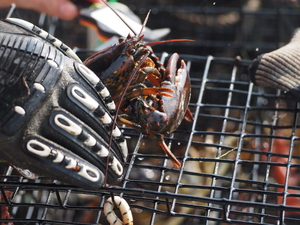
Across the Pacific coast, reports of large whales tangled in buoys, gillnets and other fishing equipment are increasing.
In 2025, Washington was among four states where nearly 80% of reported whale entanglements occurred, according to a recent report by the National Oceanic and Atmospheric Administration.
Of the Pacific coastal states with the most reports, California had the highest at 27.6%; Alaska had 23.7%; Hawaii, 15.8%; and Washington, 11.8%.
Disentanglement is a dangerous and highly skilled job. There are very few responders federally authorized to lead an entanglement response. Jenn Tackaberry is one of them.
“The whales never know that we’re helping,” said Tackaberry, co-director of the entanglement response team at the small nonprofit Cascadia Research Collective. “If you think about it, the whales are having one of the worst days of their life.”
The organization, based out of Olympia, is home to the only team in the Pacific Northwest federally authorized to lead a full response.
Sometimes, it’s too dangerous for the team to respond, Tackaberry said. Whales can become aggravated and slap the surface of the water, make rumbling noises and thrash. When whale behavior is deemed unsafe, the team will leave and try again another day.
Washington had nine of the 76 confirmed reports. Responders fully freed two whales and partially disentangled one. Four whales, including a killer whale, broke free on their own. One gray whale died, and responders could not reach another whale that was last reported still entangled.
Reports in 2025 were up over 50% from 2024. Officials point to warming oceans as one reason for the increase.
Most fishing occurs in coastal ecosystems where biodiversity is abundant. When marine heat waves push colder water against the coast, it leads anchovies, and as a result whales, into fishing territory, said Michael Milstein, NOAA spokesperson.
The crew at the Cascadia Research Collective has five highly trained responders, including Doug Sandilands and John Calambokidis, who are also trained to lead a whale disentanglement. The nonprofit collaborates with other lower-level responders across the region and is a leader in whale necropsy expertise.
During a response, staff members do not get in the water but work from small research boats using poles with hook knives and other gear to cut the lines.
Many entanglement responders are seeing more reports than usual this year, which historically occur during El Niño conditions, Tackaberry said. The higher number of 2026 responses has already taken up their budget, she added.
On top of that, the nonprofit will face a gap in federal funding beginning in January due to the cancellation of a federal grant in 2025, Tackaberry said.
“2027 is shaping up to be a tough year,” she said. Funding is needed to “respond to animals in need, and ensure proper data is collected to prevent future human-caused injury and mortality in the future.”
Olympia, WA