Oklahoma added millions in children’s literacy funding. Schools are still waiting for it.
Nov 19, 2026 | 3:15 pm ET
Description
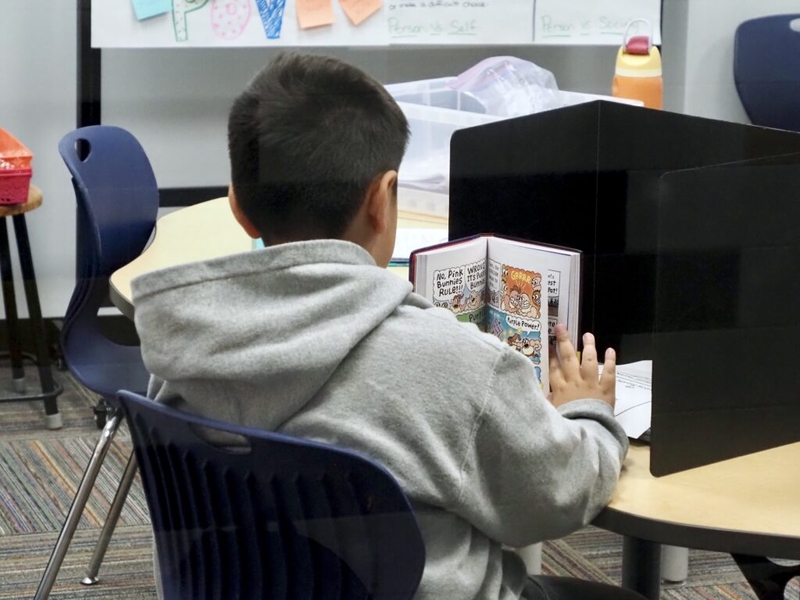
A student reads a graphic novel at Hills Elementary in Santa Fe South Charter Schools on Aug. 4 in Oklahoma City. The Oklahoma Legislature more than doubled funding dedicated to K-3 reading instruction this year, but school districts haven't yet received the funds. (Photo by Nuria Martinez-Keel/Oklahoma Voice)
OKLAHOMA CITY — While ratcheting up pressure on third-grade reading scores, Oklahoma lawmakers more than doubled state funding for early literacy support, but public school leaders complain they’re still waiting to receive the money.
District leaders said the timing of the $43.57 million Strong Readers Act funding, usually delivered in December or January, no longer suits the high-stakes nature of Oklahoma’s literacy laws.
Had the funding — or at least a projection of each district’s allocation — been delivered by the time classes began in August, multiple superintendents said their schools would be better equipped to prepare students before the 2027-28 academic year, when third graders’ performance on state reading tests will determine whether they advance to fourth grade.
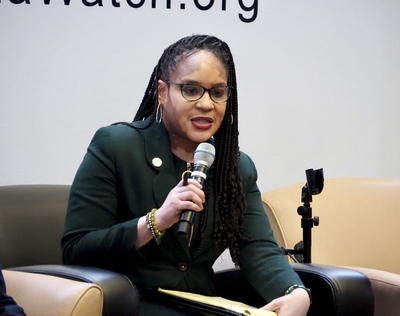
“Right now our second graders need the support,” Tulsa Public Schools Superintendent Ebony Johnson said during a Nov. 12 education forum hosted by Oklahoma Watch. “Our first graders need the support in order to get ready for second grade, and we do not have the resources yet. I know they’re coming, but it’d be great if they were here already in order for us to get the reading interventionists, the reading specialists and all of the additional resources that we need to prepare for ’27-28.”
Tulsa, the largest district in the state, received just under $1.17 million from the Strong Readers Act last year, state records show, and could see its allocation increase with the added funding.
Children who score “below basic” on the third grade state reading test and fail a second literacy assessment would be held back, unless they meet narrow criteria for an exemption. This spring, 44% of third graders scored below basic on the state reading exam, indicating they are well behind their grade level.
State lawmakers passed the new law intending for Oklahoma, which scored near the bottom in the country in fourth-grade reading, to emulate Mississippi, which rocketed up national rankings with similar legislation.
The Legislature also added $26 million to the Strong Readers Act budget. These funds support remediation, diagnostic assessments and learning materials for struggling readers in grades K-3. They also fund teacher professional development and salaries for reading interventionists and instructional coaches.
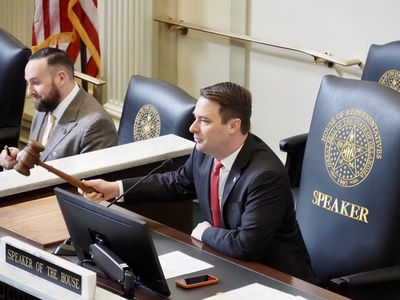
House Speaker Kyle Hilbert, R-Bristow, said he’d be open to changing the timing of when reading funds are paid or when projections are provided to districts.
Hilbert, an author of the literacy legislation, said the Oklahoma State Department of Education could adjust its administrative policies to move up that timeline or the Legislature could change state laws.
He said he’s not concerned, though, that the current system will negatively impact implementation of the new law, and there’s “no chance” he would consider postponing student retention from taking effect.
“If they got the funds a couple of months quicker, would it change anything? It shouldn’t,” Hilbert said. “Because at the end of the day, the job of our public schools is to educate our kids, and reading is essential to that. So, teaching kids to read should be the fundamental job of every elementary school in the state. And so, if they’re not doing that, then what are they doing?”
Lawmakers also changed how the Strong Readers Act budget is distributed, designating 40% for general reading instruction, 30% for students needing more intervention and 30% as an incentive for districts that show improvement.
The recent changes have made it difficult for district leaders to calculate how much their schools might receive this year, said Steven Stefanick, superintendent of the Harding Charter Preparatory School District in Oklahoma City.
Without knowing how much his district will be allocated, Harding Charter Prep was able to put reading supports in place based only on what last year’s funding levels could afford, he said.
State records show Harding Charter Prep received $7,900 from the Strong Readers Act last school year, when the state’s total budget for it was $17 million.
“We’re being asked to do a Mississippi miracle on dollars from last year,” Stefanick said. “How are schools going to hire additional reading supports and specialists and things without that funding being put in place?”
Strong Readers Act funds are typically doled out in December or January because the distribution relies on the annual Oct. 1 count of every district’s enrollment, said Tara Thompson, chief communications officer for the Oklahoma State Department of Education.
It also factors in a Strong Readers Survey due Oct. 1 in which districts report how many of their students are behind in reading.
“The data will need to be verified before we move forward, but once the reports are verified, payments are sent to districts,” Thompson said.
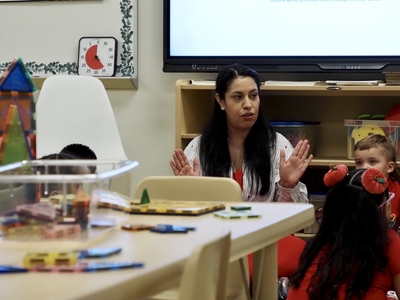
That means the added funding arrives after most districts have already hired their staff and implemented instructional plans.
The end result, Stefanick said, is the extra reading dollars will primarily be put to use in the following school year. Receiving an early estimate of his district’s annual allocation could have sped up preparations, he said, but instead pressure will mount even higher on 2027-28.
“Most districts are just going to pocket the money and wait until August to spend it, but now we just wasted an entire year of a second grader’s academic ability,” he said.
Clinton Public Schools hasn’t received notice of what its Strong Readers Act allocation will be, either, but that hasn’t caused any issues for the western Oklahoma district, Superintendent Nathan Meget said.
Clinton schools provides reading coaches from the elementary level up to seventh and eighth grade. Meget said it’s been a longtime goal of the district to do so.
The added reading funding “will definitely help us out,” he said, but “as of now it has not affected us in a negative manner.”
Clinton received $59,388 in the 2026 fiscal year, according to state records.
In Tulsa County, Jenks Public Schools collected $178,405. Jenks Superintendent Stacey Butterfield said she’s been suggesting to state lawmakers that, if the literacy law has changed, the timing of its corresponding funds should, too.

Other education dollars are paid sooner. The largest source of state funds for public schools, the state aid funding formula, provides an initial allocation at the beginning of the year based on the previous year’s numbers and is adjusted later once enrollment reports are finalized.
However lawmakers want to make the change, Butterfield said “we need the funding earlier” now that students face possible retention.
“We need that funding at the beginning of the year so that we can hire the reading interventionists, so that we can hire the reading specialists, so that we can begin intervening and remediating student deficits in reading at the beginning of the year because they are going to be held accountable,” she said. “We’ve got to be able to work earlier.”
Oklahoma City, OK